As part of our ongoing Drugs & Ocular Side Effects Series, our goal is to help you stay informed about medications that may impact eye health. With new advances in medicine, especially in cancer treatment, understanding potential eye-related side effects is essential for protecting your vision.
What is Erdafitinib?
Erdafitinib is a targeted cancer therapy that works by blocking specific proteins (FGFR 1–4) involved in cancer cell growth. These targeted therapies are designed to focus on cancer cells while minimizing damage to healthy tissues.
What is it used to treat?
Erdafitinib is primarily used to treat certain types of cancers, including:
- Advanced or metastatic cancers with FGFR mutations
- (In some cases) prostate cancer and other solid tumors
How can it affect your eyes?
While these therapies are highly effective, they can sometimes affect the eyes.
One key condition to be aware of:
- Central Serous Retinopathy (CSR) – a condition where fluid builds up under the retina
Other reported ocular side effects include:
- Dry eye
- Conjunctivitis
- Corneal changes
- Cataract formation (rare)
What does this mean for your vision?
In many cases, vision changes can be mild and temporary if detected early.
Case insight from Dr. Pradhan:
A patient experienced a change in vision from 20/30 to 20/50 due to fluid under the retina. After pausing the medication, the fluid resolved and vision returned to baseline. The patient was later able to safely resume treatment.
What will you see in the images?
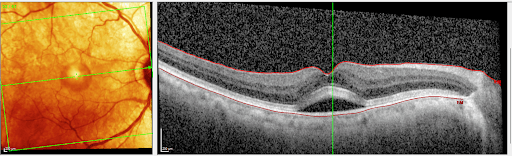
- Left image: The highlighted central circle shows the area of fluid buildup
- Right image: A bubble-like pocket of fluid under the retinaWhy does this happen?
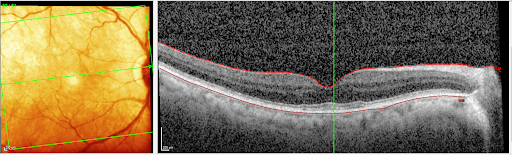
After 2 weeks of stopping the drug, almost full resolution.
These findings are often only visible with advanced imaging like OCT.
Why does this happen?
Erdafitinib targets the FGFR pathway, which is involved not only in cancer growth but also in normal retinal function. This can sometimes lead to fluid accumulation beneath the retina.
Important Considerations
In many cases, the retinal changes associated with Erdafitinib are reversible once the medication is paused or stopped.
Important Trade-Off: To prevent potential long-term or permanent retinal damage, the medication may need to be temporarily discontinued. While this helps protect vision, it can also delay ongoing cancer treatment, making close coordination between your oncology and eye care teams essential.
How can you protect your vision?
If you are taking or starting Erdafitinib:
- Get a baseline eye exam before or shortly after starting treatment
- Schedule regular monitoring during therapy
- Report any changes in vision immediately (blur, distortion, dimming)
Early detection allows for:
- Temporary medication adjustment if needed
- Prevention of long-term vision damage
- Safe continuation of cancer treatment when possible
Advances in cancer care are life-changing but your vision should not be overlooked. With proper monitoring, many ocular side effects can be detected early and managed effectively.
Call our office today at (804) 270-3333. Schedule an eye exam with Dr. Pradhan to ensure your eyes are being carefully monitored and protected.
Your care is a partnership—and we’re here to help protect both your health and your vision every step of the way.

Dr. Shilpi Pradhan is a board-certified ophthalmologist, cornea specialist, and founder of Eye Doctor MD PC. Beyond providing advanced clinical treatments for dry eye disease, she guides patients in adopting targeted lifestyle changes to improve both their eye health and overall whole-body wellness. As one of the first Virginia ophthalmologists board-certified in Lifestyle Medicine (2020) and a member of the American College of Lifestyle Medicine (ACLM), Dr. Pradhan combines modern ocular care with evidence-based nutrition and habit changes to support long-term Vision Healthspan.