Did you know that your eyes can offer a direct window into your overall health? November is recognized as Diabetes and Diabetic Eye Disease Month, making it the perfect time to highlight how managing your health protects your vision and how an eye exam can reveal crucial insights about your entire body. Did you know that 115 million Americans are affected by diabetes?
Types of Diabetes: What’s the Difference?
Both types of diabetes cause high blood sugar, but they develop differently.
- Type 1 diabetes: The body’s immune system destroys the insulin-producing cells in the pancreas. People with Type 1 diabetes need insulin to manage their blood sugar.
- Type 2 diabetes: The body does not use insulin effectively and may eventually produce too little. Management may include dietary changes, physical activity, medication, and sometimes insulin.
- Type 3c diabetes: “secondary form of diabetes associated with pancreatic disease, primarily chronic pancreatitis” in 70-80% of patients with this rare new subtype. (Milani et al)
- Gestational diabetes: This is diabetes that only occurs during pregnancy and usually does not cause any eye problems.
Although Type 1 diabetes often develops in children and young adults, it can occur at any age. Type 2 diabetes is more common in adults but is becoming increasingly diagnosed in younger people.
Both types can affect your eyes, particularly when blood sugar remains high over time.
How Diabetes Damages Your Eyes
Diabetes mellitus is a metabolic condition characterized by inadequate control of blood glucose levels. When blood sugar remains high over time, it damages the small, delicate blood vessels in your eyes.
This damage can lead to a group of eye problems known as diabetic eye disease, including:
- Diabetic retinopathy & macular edema: Damaged blood vessels can leak fluid, cholesterol and blood. Diabetic macular edema (or swelling in the center of your macula) is the most common reason for mild to moderate vision loss in diabetic patients. Diabetic retinopathy is classified broadly as nonproliferative (mild, moderate and severe) and proliferative (when new blood vessels form because the eye is staving for oxygen and glucose due to excessive leakage and this can lead to the blinding type of diabetic vision loss and retinal detachments).
- Cataracts & glaucoma: Chronic high blood sugar accelerates the risk of developing these vision-threatening conditions. There are even mouse animal models looking at genetic changes that can cause classic diabetic cataracts which start as cortical clefts and then progress to cortical cataracts which grow like bicycle spokes from the periphery to the center of your vision. “Diabetes doubles the chances of having glaucoma.” (source)
In the early stages, diabetic eye disease often has no warning signs or pain. As damage progresses, symptoms may include:
- Blurry or wavy vision
- Frequently changing vision
- Dark spots, floaters, or dark areas in your vision
- Poor color vision or flashes of light
How Is Diabetes Diagnosed?
According to the American Diabetes Association (ADA), diabetes can be diagnosed using blood tests that measure glucose levels. These include:
- A1C test: 6.5% or higher, reflecting average blood sugar over approximately three months. (source)
- Fasting blood glucose: 126 mg/dL or higher after at least eight hours without food.
- Oral glucose tolerance test: 200 mg/dL or higher two hours after drinking a glucose solution.
- Random blood glucose: 200 mg/dL or higher when accompanied by classic symptoms, such as frequent urination, increased thirst, increased hunger, or unexplained weight loss.
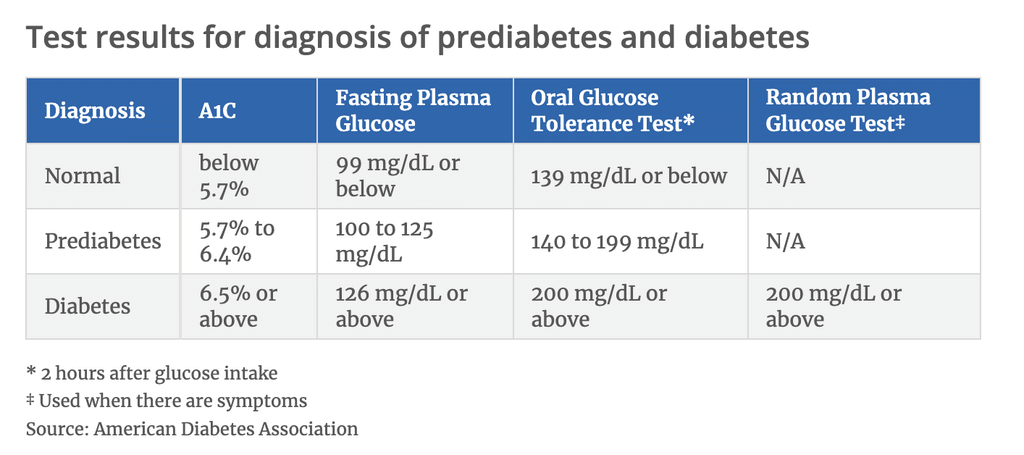
Source: National Institute of Diabetes and Digestive and Kidney Diseases
Unless there is clear evidence of diabetes, an abnormal result generally needs confirmation with repeat testing.
The ADA recommends screening adults beginning at age 35, with earlier testing for people with certain risk factors. Your primary care doctor can help determine when screening is appropriate for you.
Your Eyes Mirror Your Overall Health & Kidneys
A comprehensive, dilated eye exam allows your eye doctor to look for damage to the retina and other eye conditions related to diabetes.
The recommended eye exam timeline is:
- Type 2: soon after diagnosis in adults
- Type 1: after 5 years for type 1 in adults and once children are in puberty for children. (source) I was privileged to participate in a retrospective chart review which was published when I was in medical school about diabetic eye exams in children with type 1 DM showing that children do not develop retinopathy until they are in puberty even if they were diagnosed with type 1 diabetes under age 2 (so a long duration of disease). (source)
Diabetes can also affect your kidneys, sometimes leading to serious complications. While an eye exam does not directly assess kidney function, findings in your eyes may provide important clues about your overall vascular health. Regular blood and urine tests with your primary care doctor are essential for monitoring kidney health.
Protecting and Reversing Diabetes Through Lifestyle
While medical management and monitoring are vital, lifestyle and diet play a powerful role in controlling and even reversing Type 2 diabetes.
Research shows that dietary choices and exercise are highly effective in supporting insulin sensitivity and stabilizing blood sugar.
- To explore how dietary changes can help manage and reverse diabetes, we highly recommend Dr. Neal Barnard’s book, Program for Reversing Diabetes.
- Read our blog to learn more about how you can make lifestyle changes and what they can do to support your health.
- Walking for 10-15 minutes after each meal can help regulate your blood sugar in all patients but especially those with diabetes.
Important: Healthy dietary changes can help manage type 2 diabetes, and some people may achieve remission with appropriate lifestyle changes and medical care. However, remission is not guaranteed and requires ongoing monitoring. Type 1 diabetes requires insulin treatment; dietary changes alone cannot reverse it. Always consult your healthcare team before changing your diet or medication.
Steps You Can Take Today to Protect Your Vision
It is never too late to take charge of your health. Caring for yourself today helps protect and preserve your sight for all the years ahead and it starts with these essential steps:
- Manage your diabetes ABCs: Keep your A1C (blood glucose), blood pressure, and cholesterol in a healthy range.
- Quit smoking: If you smoke, seek support to stop, as smoking exacerbates blood vessel damage.
- Schedule an annual dilated eye exam: Regular dilated exams allow your eye doctor to detect and address changes early, often before vision loss begins.
Prioritize Your Eye & Overall Health This Month
If you have diabetes or haven’t had your annual dilated eye exam yet, give us a call at (804) 270-3333 or visit our website to schedule your eye exam with Dr. Pradhan!
For more information on caring for your vision and whole-body health, subscribe to our YouTube channel.
Sources:
https://www.ncbi.nlm.nih.gov/books/NBK551501
https://pubmed.ncbi.nlm.nih.gov/33438363

Dr. Shilpi Pradhan is a board-certified ophthalmologist, cornea specialist, and founder of Eye Doctor MD PC. Beyond providing advanced clinical treatments for dry eye disease, she guides patients in adopting targeted lifestyle changes to improve both their eye health and overall whole-body wellness. As one of the first Virginia ophthalmologists board-certified in Lifestyle Medicine (2020) and a member of the American College of Lifestyle Medicine (ACLM), Dr. Pradhan combines modern ocular care with evidence-based nutrition and habit changes to support long-term Vision Healthspan.